
Fauvism was one of the first truly revolutionary art movements of the twentieth century, exploding onto the European art scene with an extraordinary burst of colour, energy and creative freedom. Although the movement lasted only a few years, from around 1905 to 1910, its impact on modern art was profound. Rejecting the traditional use of realistic colour and careful modelling, the Fauvist painters embraced bold, expressive hues and simplified forms, proving that colour could communicate emotion just as powerfully as subject matter. Their daring approach paved the way for many of the artistic movements that followed, including Expressionism and modern abstraction.
The name Fauvism comes from the French word les fauves, meaning “the wild beasts”. It was coined by a critic who was astonished by the artists’ vivid, unconventional paintings when they were exhibited at the 1905 Salon d’Automne in Paris. What was intended as an insult was soon adopted as the name of one of the most exciting movements in the history of art.
At the heart of Fauvism was Henri Matisse, whose joyful use of brilliant colour and flowing composition established him as the movement’s leading figure. Rather than painting colours exactly as they appeared in nature, Matisse used them to express mood, harmony and emotion. A green face, a purple sky or a bright red landscape were not mistakes—they were deliberate artistic choices designed to create a powerful visual experience.
Alongside Matisse was André Derain, whose vibrant landscapes of London, the French countryside and the Mediterranean demonstrated how colour could transform even familiar scenes into dynamic works of art. Maurice de Vlaminck brought an even greater intensity to the movement, using thick brushstrokes and brilliant colours to convey energy and raw emotion. Other important contributors included Raoul Dufy, whose light-filled coastal scenes and decorative style became widely admired, Kees van Dongen, celebrated for his striking portraits, and Georges Braque, who briefly embraced Fauvism before becoming a pioneer of Cubism alongside Pablo Picasso.
Unlike many earlier artistic movements, Fauvism was less concerned with precise detail or realistic perspective. Instead, artists simplified shapes, flattened space and applied colour directly from the tube in bold, confident strokes. Landscapes, portraits and still lifes became opportunities to explore colour as an expressive force rather than simply a way of recording reality. The result was art that feels vibrant, uplifting and surprisingly modern, even more than a century later.
Although Fauvism was relatively short-lived, its influence has endured for generations. Its fearless use of colour inspired Expressionism, influenced modern design and continues to shape contemporary painting, illustration and even fashion. The movement also helped audiences understand that art does not have to imitate reality to be meaningful—it can communicate through colour, feeling and imagination alone.
One of the reasons Fauvism remains so popular is its accessibility. You do not need an expert knowledge of art to appreciate its joyful colours, expressive brushwork and uplifting compositions. Whether depicting a peaceful landscape, a bustling harbour or a simple portrait, Fauvist artists invite us to experience the world through emotion rather than strict observation, making their work both visually exciting and deeply engaging.
The Fauvists bold vision transformed modern art, proving that colour itself can tell a story, evoke emotion and inspire generations of artists and art lovers alike.
Here are standout examples of work by leading Fauve artists.
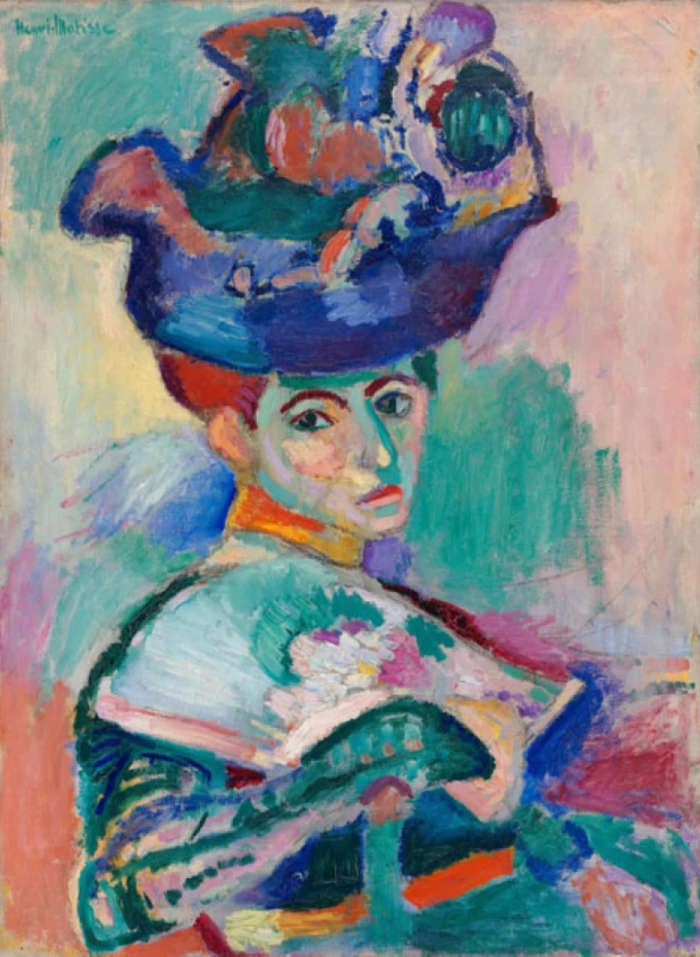
Henri Matisse – ‘Woman with a Hat’ 1905
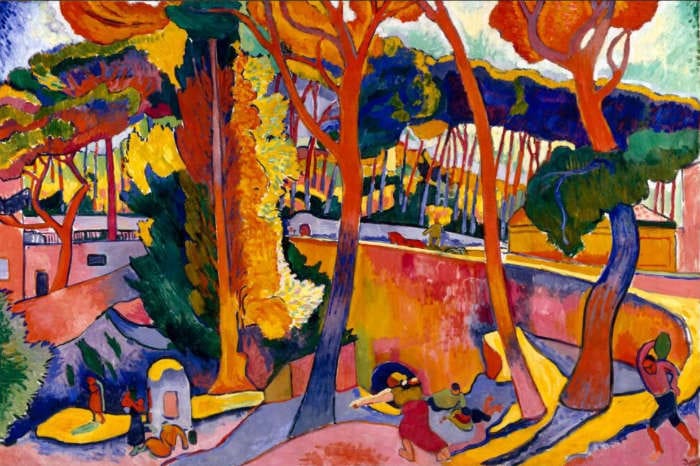
André Derain – ‘The Turning Road’ 1906
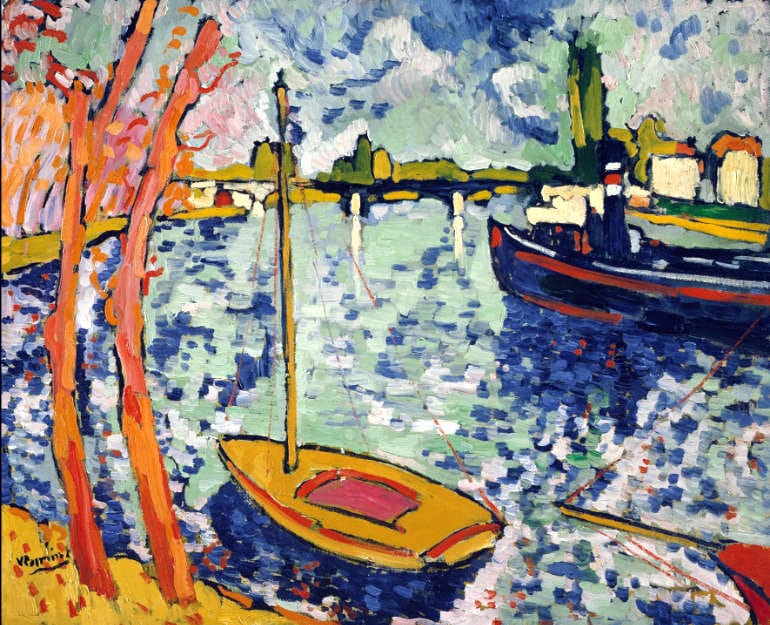
Maurice de Vlaminck – ‘The River Seine at Chatou’ 1906
Want to explore something different? Why not discover the intricacies of Cubism?