
Realism emerged during the mid-nineteenth century as a bold and revolutionary art movement that transformed the way artists represented the world around them. Flourishing between approximately 1850 and 1900, Realism rejected the idealised subjects and dramatic storytelling that had dominated earlier artistic traditions. Instead, Realist painters turned their attention to ordinary people, everyday life and the social realities of a rapidly changing world. The result was a movement that brought honesty, authenticity and humanity to the forefront of European art.
Born in France in the aftermath of the 1848 Revolution, Realism reflected a growing desire to portray life as it truly was. Rather than celebrating mythology, religion or aristocratic grandeur, Realist artists found inspiration in farmers working the land, labourers in factories, bustling city streets and quiet domestic scenes. Their paintings captured both the dignity and the hardships of everyday existence, encouraging viewers to see beauty and meaning in the lives of ordinary people.
Among the pioneers of the movement was Gustave Courbet, whose uncompromising depictions of rural life and working people challenged the artistic establishment and helped define Realism itself. Jean-François Millet became renowned for his sympathetic portrayals of peasant life, celebrating the resilience and dignity of agricultural workers in masterpieces such as The Gleaners and The Angelus. Honoré Daumier, equally accomplished as both painter and printmaker, brought sharp social observation and political commentary to his work, capturing the lives of ordinary Parisians with remarkable insight and humanity.
Realism soon spread beyond France, influencing artists across Europe and America. In Britain, Ford Madox Brown and Luke Fildes produced powerful scenes that reflected social conditions and everyday experience. In Spain, Joaquín Sorolla combined Realist observation with luminous light and colour, creating vibrant depictions of coastal life and working communities. In Russia, Ilya Repin became one of the movement’s leading figures, producing emotionally compelling paintings that documented the lives of workers, peasants and the emerging middle classes with extraordinary psychological depth.
One of the defining characteristics of Realism is its commitment to accurate observation. Artists carefully studied light, anatomy, texture and perspective to create convincing representations of the natural world. Every detail, from weathered hands and worn clothing to changing landscapes and working animals, was painted with remarkable precision. This dedication to truthfulness gave Realist paintings a powerful emotional impact, allowing audiences to connect with their subjects on a deeply human level.
Although Realism sought to depict life faithfully, it was far from simple documentation. Many artists used their work to highlight social inequality, poverty and the effects of industrialisation. By portraying workers, rural communities and the less privileged with dignity and respect, Realist painters challenged traditional artistic hierarchies and encouraged conversations about society, justice and modern life. Their paintings became not only works of art but also important reflections of the era in which they were created.
Today, the principles established by the Realist movement continue to inspire artists around the world. Contemporary movements such as American Realism, Photorealism and Contemporary Realism have built upon the nineteenth-century commitment to truthful observation, while adapting it to modern subjects, techniques and social issues. Whether depicting urban life, portraiture or everyday experiences, these artists demonstrate that Realism remains a vibrant and evolving tradition. Explore our collection to discover the artists, masterpieces and stories that defined the original Realist movement, and see how its honest vision of everyday life continues to influence painters and collectors in the twenty-first century.
Please note: These artists are known for their contribution to Realism—but their creativity extended far beyond a single movement.
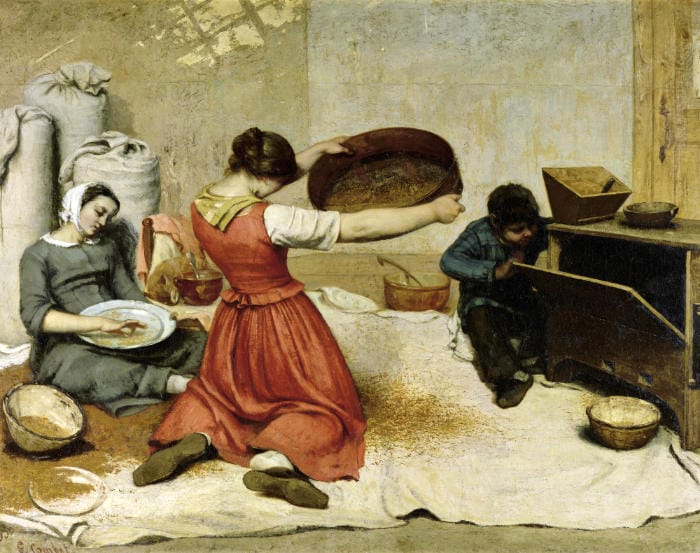
Gustav Courbet – ‘The Wheat Sifters’ 1854
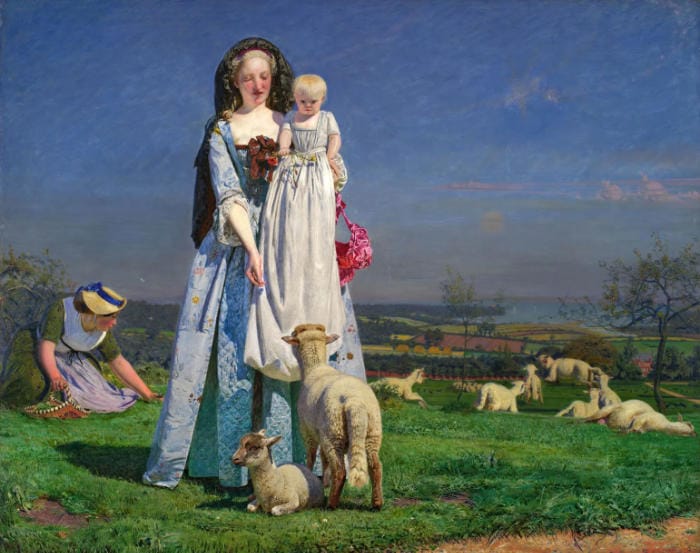
Ford Maddox Brown – ‘Pretty Baa Lambs’ c. 1852
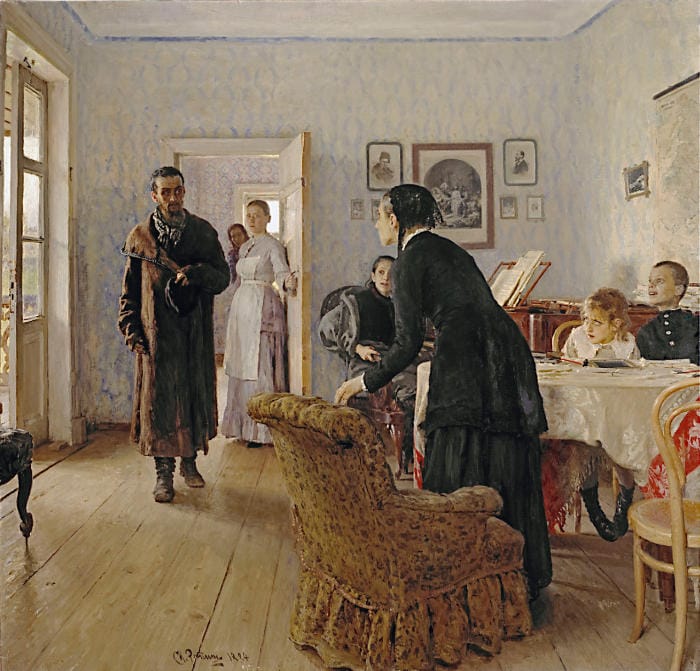
Ilya Repin – ‘They did not expect Him’ 1884
Where imagination paints without rules – discover Naïve Art