
Minimalism emerged during the early 1960s as one of the most influential and thought-provoking movements in modern art. Stripping away unnecessary detail and decorative elements, Minimalist artists sought to reduce art to its essential forms. Clean lines, simple geometric shapes, industrial materials and carefully considered compositions became the defining characteristics of a movement that challenged traditional ideas of beauty, craftsmanship and artistic expression. By embracing the principle of “less is more”, Minimalism transformed the relationship between artwork, space and the viewer.
Developing primarily in the United States during a period of rapid social and cultural change, Minimalism was, in many ways, a reaction against the emotional intensity of Abstract Expressionism. Rather than emphasising the artist’s personal feelings or expressive brushwork, Minimalist artists created works that were objective, precise and free from symbolism. Their focus shifted towards the physical presence of the artwork itself, encouraging viewers to experience form, scale, proportion and material without distraction.
Among the pioneers of the movement was Donald Judd, whose meticulously constructed boxes and geometric installations became icons of Minimalist art. Rejecting traditional painting and sculpture, Judd created works that occupied real space, inviting audiences to consider the relationship between object, environment and perception. Carl Andre took a similarly radical approach, arranging industrial materials such as bricks, metal plates and timber directly on the floor, challenging conventional expectations of sculpture and encouraging viewers to engage with the work from new perspectives.
Another major figure was Dan Flavin, who revolutionised contemporary art through his innovative use of commercially available fluorescent light tubes. His luminous installations transformed architectural spaces into immersive environments where light itself became the artistic medium. Sol LeWitt, although often associated with both Minimalism and Conceptual Art, contributed significantly through his wall drawings and geometric structures, demonstrating that ideas and systems could be as important as the finished artwork. Robert Morris further expanded the movement with large-scale geometric sculptures that explored balance, scale and the viewer’s physical experience of space.
Minimalism was not simply about creating simple objects. It fundamentally questioned the nature of art itself. By removing narrative, symbolism and ornamentation, artists encouraged audiences to slow down and observe subtle relationships between shape, texture, light and space. Every proportion, material and placement was carefully considered, creating works that reveal new qualities the longer they are viewed.
The influence of Minimalism soon extended far beyond galleries and museums. Its principles shaped architecture, interior design, furniture, graphic design and fashion, inspiring a timeless aesthetic based on clarity, functionality and restraint. Even today, the clean lines and uncluttered elegance associated with Minimalism continue to influence contemporary designers and artists around the world.
Exploring Minimalism offers far more than an appreciation of simplicity. It provides an opportunity to discover how reducing art to its essentials can produce works of remarkable power, beauty and intellectual depth. Browse our collection to explore the artists, sculptures, paintings and installations that defined the Minimalist movement, and discover how a revolutionary approach from the 1960s continues to shape contemporary art and design today.
Here are standout examples of work by leading Minimalist artists.
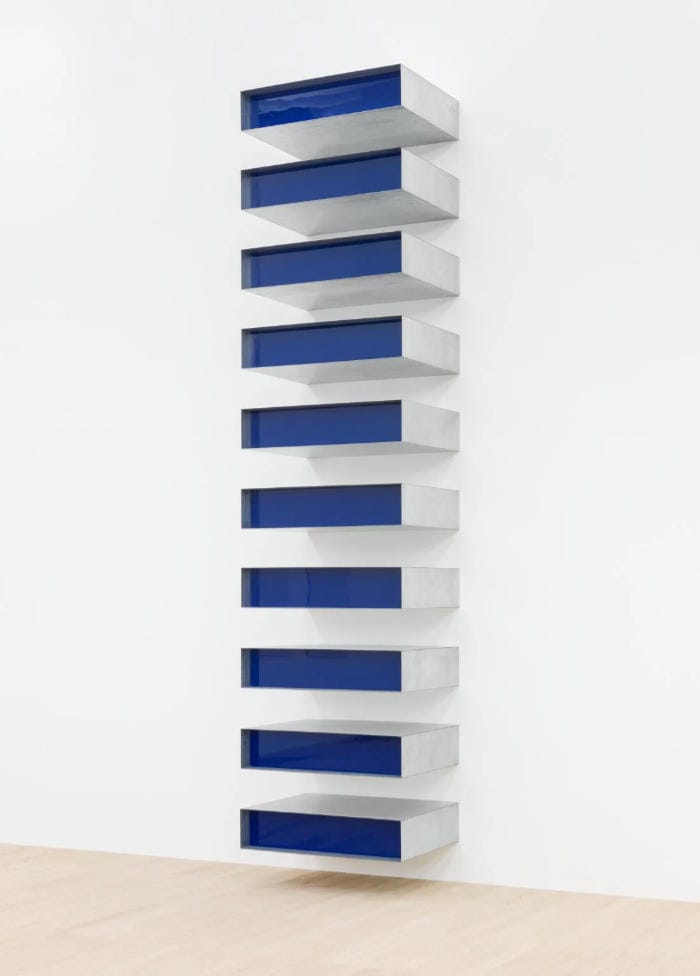
Donald Judd – ‘Untitled’ 1990
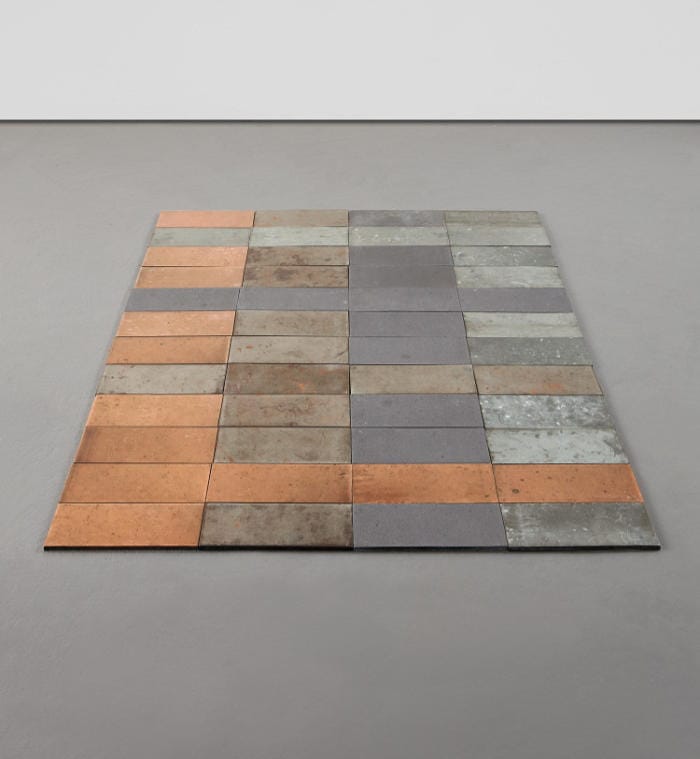
Carl Andre – ’48 Bar Rectangular Fugue on 4 Ancient Metals’ 1988
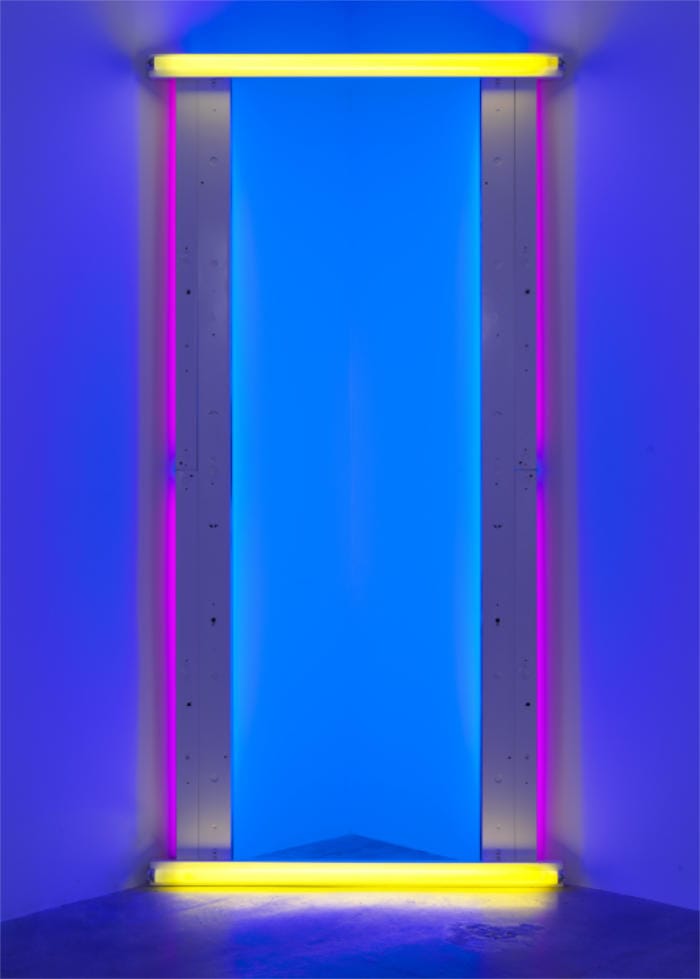
Dan Flavin – ‘Untitled Two’ 1971