
Conceptual Art emerged in the 1960s as one of the most radical and intellectually challenging movements in modern art history. At its core, Conceptual Art shifted the focus away from the physical object and placed emphasis on to the idea itself. In this movement, the concept behind the artwork became more important than its material form, challenging long-held assumptions about what art is, how it is made, and how it should be experienced.
Developing in parallel with Minimalism, Conceptual Art shared a preference for simplicity and clarity, but pushed these ideas even further. While Minimalist artists reduced art to essential forms and materials, Conceptual artists argued that the artwork did not even need to exist as a traditional object. Instead, it could be expressed through instructions, documentation, text, photography or performance. This radical shift redefined the role of the artist from maker to thinker, and invited audiences to engage with art on an intellectual rather than purely visual level.
One of the most influential figures in Conceptual Art was Sol LeWitt, who famously stated that “the idea becomes a machine that makes the art.” His wall drawings, often executed by others following precise written instructions, demonstrated that authorship and physical creation could be separated. LeWitt’s structured systems and geometric logic also linked him closely to Minimalism, bridging the two movements.
Another key artist was Joseph Kosuth, whose work explored language, meaning and representation. His iconic piece One and Three Chairs presented a chair, a photograph of a chair and a dictionary definition, encouraging viewers to question how meaning is constructed. Lawrence Weiner further expanded the boundaries of Conceptual Art by presenting artworks as written statements, often displayed directly on gallery walls, emphasising language as the primary artistic medium.
The movement also included artists such as John Baldessari, who combined photography and text with humour and critical insight, and Yoko Ono, whose instruction-based “event scores” invited participants to imagine or perform simple conceptual actions. These works blurred the line between art and life, making the viewer an active participant in the creative process.
Conceptual Art often deliberately rejected traditional aesthetics, materials and craftsmanship. Instead, it encouraged audiences to focus on ideas such as language, systems, identity, politics and perception. By doing so, it opened up entirely new possibilities for artistic expression and laid the groundwork for many forms of contemporary art, including installation, performance and digital media.
Today, Conceptual Art continues to influence artists, designers and thinkers around the world. Its legacy can be seen in works that prioritise ideas over objects, and in creative practices that challenge viewers to question assumptions about reality, communication and meaning. Exploring Conceptual Art is not just about viewing artworks—it is about engaging with ideas that transform the way we understand art itself.
Here are standout examples of work by leading Conceptual artists.
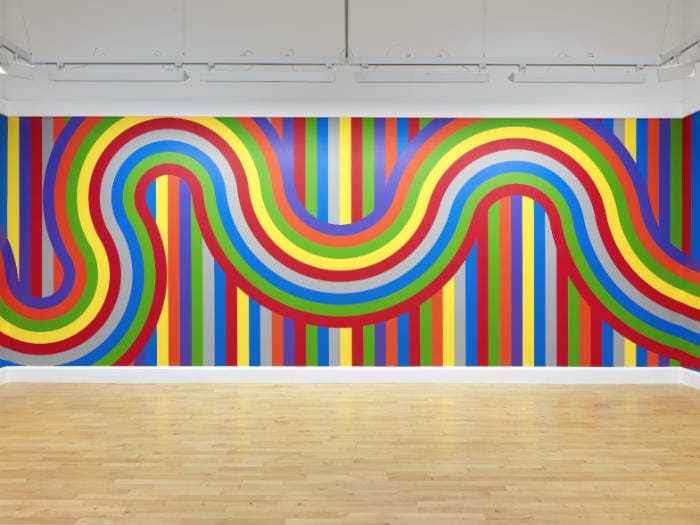
Sol LeWitt – ‘Wall Drawing’ 1998
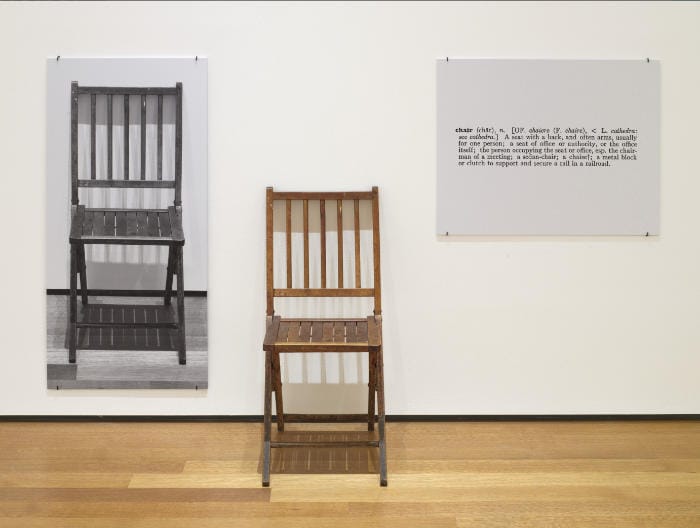
Joseph Kosuth – ‘One and Three Chairs’ 1965
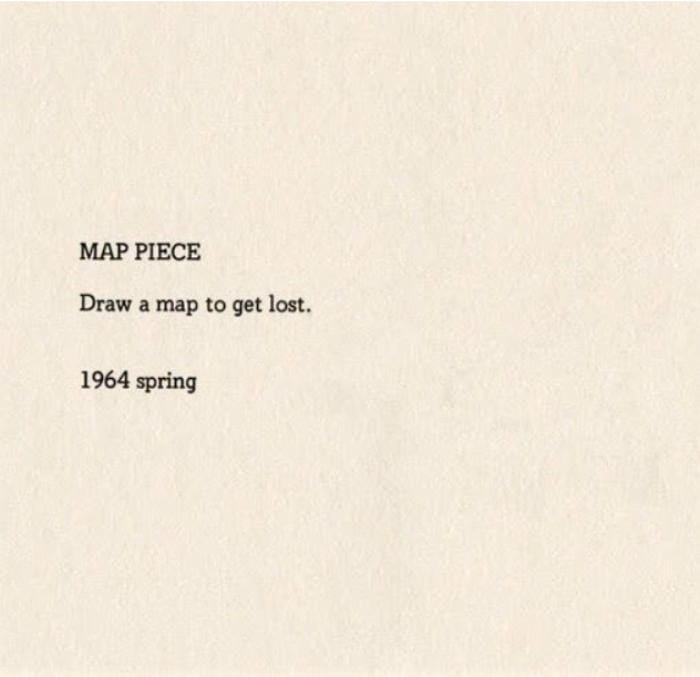
Yoko Ono – ‘Map Piece’ 1964
Ready to explore further? Discover the bold ideas and playful contradictions of Postmodernism.